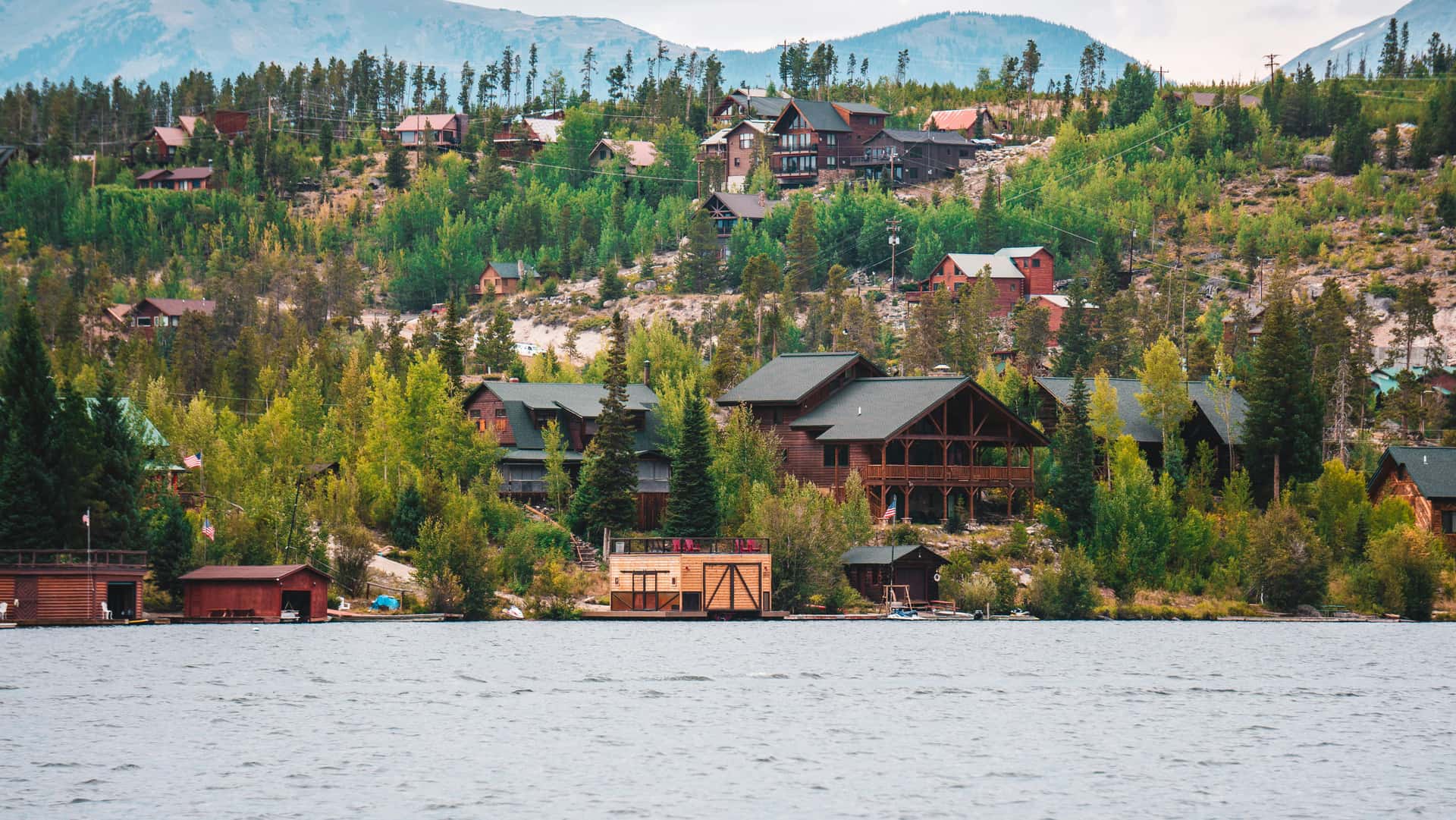
Why Build Custom in Colorado's Mountains?
In a market where the best luxury properties rarely come up for sale — and when they do, command premium prices — building custom gives you something money alone can't buy: exactly the home you want, on the site you choose, designed for how you actually live.
Colorado's luxury mountain construction market is thriving. Limited existing inventory in Vail, Telluride, Aspen, and Steamboat Springs is pushing more affluent buyers toward custom builds. Modern mountain architecture — clean lines, massive glass, warm natural materials — is in peak demand, and the right building site with protected views can appreciate independently from the home itself.
But financing a luxury mountain construction project is substantially more complex than buying an existing home. Here's what you need to know.
How Luxury Construction Financing Works
The Two-Phase Structure
Most luxury mountain builds use a construction-to-permanent loan (also called a single-close loan):
Phase 1: Construction (12–18 months)
- Funds are disbursed in draws as construction milestones are completed
- You pay interest-only on the amount drawn (not the full loan amount)
- An inspector verifies completed work before each draw is released
- Typical draw schedule: foundation, framing, mechanical/electrical, drywall, finishes, completion
Phase 2: Permanent Mortgage (upon completion)
- The construction loan automatically converts to a traditional fixed or adjustable-rate mortgage
- No second closing, no second set of closing costs
- Rate can be locked at the start of construction or at conversion (varies by lender)
Alternatively: Two-Close (Construction + Permanent)
Some borrowers prefer separate construction and permanent loans. This adds a second closing but allows you to shop for the best permanent mortgage rate independently once the home is complete. For builds over $3M, this flexibility can be worth the additional closing costs.
Financial Requirements for Luxury Builds
Down Payment and Equity
- Total project cost up to $2M: 20–25% down
- $2M–$5M: 25–30% down
- Above $5M: 30–35% down (portfolio lender typically required)
- Land equity counts: If you own the lot, its value contributes to your equity position
Example: $4M Total Build
- Land (already owned): $1,200,000
- Construction cost: $2,800,000
- Total project: $4,000,000
- Required equity (25%): $1,000,000
- Land equity applied: $1,200,000 (exceeds requirement)
- Additional cash needed: $0 (land covers the equity)
- Construction loan amount: $2,800,000
Reserves and Documentation
- 12–18 months of projected mortgage payments in liquid reserves
- Full income documentation (2 years tax returns, W-2s or business returns)
- Asset documentation sufficient to cover construction cost overruns (typically 10–15% contingency)
- Signed construction contract with a licensed Colorado builder
- Complete architectural plans, engineering reports, and permits
Mountain-Specific Construction Challenges
Altitude Engineering
Building at 7,000–10,000+ feet introduces engineering requirements that increase costs 15–30% compared to Front Range construction:
- Snow loads: Roofs must handle 80–150+ pounds per square foot depending on location
- UV exposure: Exterior materials degrade faster at altitude — high-quality stains, UV-resistant windows, and durable siding are essential
- Freeze-thaw cycles: Foundation and concrete work require specialized approaches
- Wind loads: Exposed ridgeline sites need additional structural reinforcement
- Heating systems: Radiant floor heating, high-efficiency boilers, and backup systems are standard for luxury mountain homes
Construction Season
Colorado's mountain building season is compressed:
- Optimal: May through October (5–6 months)
- Extended (with cost premiums): April through November
- Winter work: Possible for interior finishes but exterior work is limited and expensive (heated enclosures, snow management, reduced crew availability)
- Impact: A home that could be built in 12 months on the Front Range may take 18–24 months in the mountains
Your construction loan term should account for this extended timeline. Standard 12-month construction periods are often insufficient for mountain builds — negotiate for 18–24 months upfront to avoid costly extensions.
Site Access and Infrastructure
Remote mountain building sites can add significant costs:
- Road construction or improvement ($50K–$250K+)
- Utility extensions (power, water, gas) if not at the lot line
- Well drilling ($15K–$50K) and septic system ($20K–$75K) if no municipal services
- Material staging areas — steep or narrow roads may require helicopter delivery for certain components
All of these costs should be included in your total project budget and reflected in the construction loan amount.
Selecting a Builder for Luxury Mountain Construction
Your builder selection directly impacts financing. Lenders evaluate your builder as part of the loan approval, looking for:
- Colorado general contractor license and insurance
- Proven experience with luxury mountain builds (not just Front Range homes)
- Track record of completing projects on time and within budget
- Financial stability (lenders may review the builder's financials)
- References from recent $2M+ mountain projects
Interview at least three builders before committing. Ask to tour active job sites, speak with recent clients, and review their contract terms — particularly how they handle change orders, material cost escalations, and weather delays.
Cost Per Square Foot: What to Expect
Luxury mountain construction costs in 2026:
- High-end custom (Aspen, Vail, Telluride): $800–$1,500+ per square foot
- Premium custom (Steamboat, Breckenridge, Durango): $500–$800 per square foot
- Upscale custom (mountain suburbs, foothill communities): $350–$500 per square foot
A 5,000 sq ft custom home in Vail at $900/sq ft = $4.5M in construction costs alone, plus land. When combined with a premium lot ($1M–$3M+ in the Vail Valley), total project costs of $5.5M–$8M+ are common for truly luxury builds.
Protecting Your Investment
Contingency Budget
Always build in a 10–15% contingency above the construction contract price. Mountain builds are particularly prone to surprises — rock during excavation, weather delays, material escalation, and design changes during construction. A $4M build should have $400K–$600K in accessible contingency funds.
Builder's Risk Insurance
Required by all construction lenders, this policy covers the structure during construction against fire, theft, weather damage, and vandalism. In wildfire-prone mountain areas, ensure adequate coverage and verify the policy terms with your lender.
Draw Inspection Protocol
Each construction draw is released only after an independent inspector verifies that the stated work is complete and meets quality standards. This protects both you and the lender, ensuring funds aren't advanced ahead of actual progress.
Getting Started
The best time to secure construction financing is before you finalize architectural plans. Understanding your budget constraints early allows your architect and builder to design within realistic parameters, avoiding the costly exercise of redesigning a home that exceeds your financing capacity.
- Get pre-approved for construction financing to establish your total project budget
- Secure your building site — land purchases can be financed separately or rolled into the construction loan
- Select your architect and builder with mountain luxury experience
- Finalize plans and permits before converting to a full construction loan commitment
Planning a luxury custom build in Colorado's mountains? Contact Cedar Home Loans to discuss construction financing options. We work with portfolio lenders experienced in high-value mountain construction projects. Call (303) 549-5277.