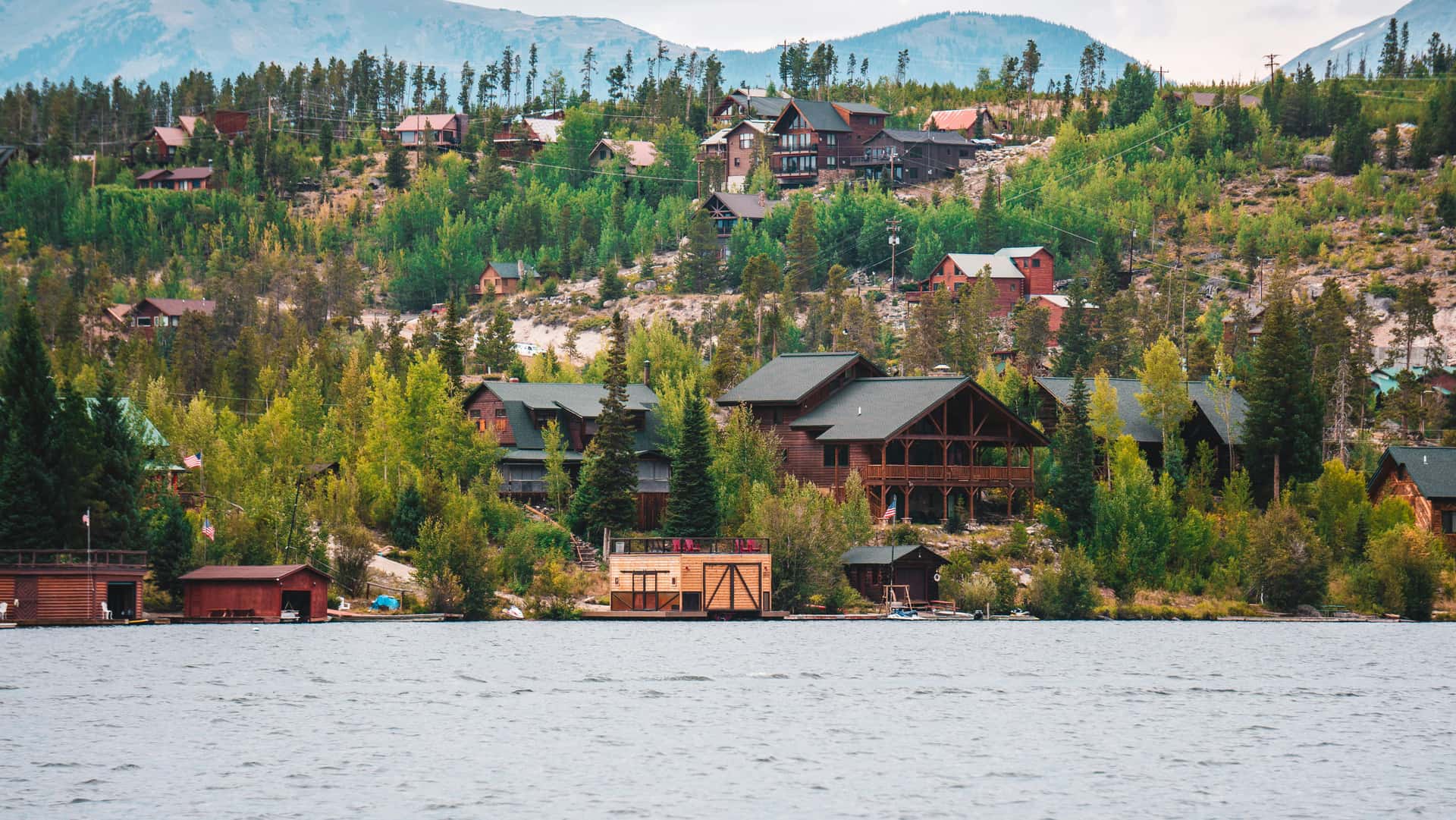
The Insurance Landscape Is Changing for Colorado Mountain Homeowners
If you're buying a home in Colorado's mountain communities — or already own one — the cost and availability of homeowners insurance is something you can no longer afford to overlook. Wildfire risk, combined with hail and severe weather exposure, has pushed Colorado to the sixth-highest state in the nation for homeowners insurance costs. And the trend is accelerating.
Premiums have risen 58% between 2018 and 2023 and more than doubled over the past decade, according to recent research from Colorado State University. For mountain property buyers, understanding this landscape isn't optional — it directly impacts what you can afford, how you qualify for a mortgage, and your ongoing cost of ownership.
How Wildfire Risk Drives Insurance Costs
While hail is actually the largest driver of homeowners insurance costs statewide (26–54% of premiums), wildfire's impact varies dramatically by location:
- La Plata County (Durango area): Wildfire accounts for nearly 25% of insurance premiums
- Routt County (Steamboat Springs): 22% of premiums tied to wildfire
- Summit County (Breckenridge, Frisco): About 8% of premiums from wildfire
- Eagle County (Vail): 10–15% wildfire contribution
- Denver metro: Less than 1% wildfire impact
Over 321,000 Colorado homes face "moderate or higher" wildfire risk, with total potential reconstruction costs estimated at $141 billion. Insurers are recalculating their risk models, and mountain homeowners are feeling the results in their premium notices.
What This Means for Your Mortgage
Impact on Qualifying
Your mortgage lender includes homeowners insurance in your monthly housing payment when calculating your debt-to-income (DTI) ratio. The formula is simple: higher insurance = higher monthly payment = lower borrowing power.
Here's a practical example for a mountain home:
- Scenario A (metro home): $2,400/year insurance = $200/month
- Scenario B (mountain home in high-risk zone): $7,200/year insurance = $600/month
- Difference: $400/month less available for your mortgage payment
- Impact: Roughly $60,000 less purchasing power
Impact on Monthly Costs
For a $700,000 mountain home with 20% down ($560,000 mortgage at 6.2%):
- Principal and interest: $3,436/month
- Property taxes: ~$238/month
- Insurance (high-risk zone): $500–$800/month
- Total PITI: $4,174–$4,474/month
That insurance line item is no longer a rounding error — it's a significant portion of your monthly housing cost and needs to be factored into your budget from day one.
Colorado's FAIR Plan: Insurance of Last Resort
In response to insurers pulling out of high-risk areas, Colorado recently established a state-backed FAIR plan. This provides basic coverage for homeowners who can't find insurance on the private market. Key details:
- Coverage is available for homes that have been declined by at least one private insurer
- Premiums tend to be higher than private market rates
- Coverage may be more limited than a standard homeowners policy
- Most mortgage lenders will accept FAIR plan coverage
While the FAIR plan ensures you can still buy and finance a mountain property, it's a safety net — not a first choice. Your best strategy is to make your property as insurable as possible through mitigation.
Wildfire Mitigation: Protect Your Home and Your Budget
Taking proactive steps to reduce wildfire risk can help with both insurance availability and premiums:
Essential Mitigation Steps
- Defensible space: Clear vegetation 30 feet from the structure (Zone 1), reduce density 30–100 feet out (Zone 2)
- Fire-resistant materials: Class A roofing (metal, tile, asphalt), fiber cement siding, tempered glass windows
- Ember protection: Screen vents with 1/8-inch metal mesh, enclose eaves and soffits
- Access: Ensure driveways are wide enough for fire trucks (minimum 12 feet) with adequate turnaround space
- Water supply: Maintain cisterns or accessible water sources for fire suppression
Community Programs
Many Colorado mountain communities offer Firewise USA recognition programs and community wildfire protection plans. Participation can help with insurance availability and demonstrate risk reduction to lenders and insurers alike.
Smart Strategies for Mountain Home Buyers
1. Get Insurance Quotes Before Making an Offer
Don't wait until you're under contract to discover insurance will cost $8,000 per year. Get preliminary quotes during your property search so you can budget accurately. Your real estate agent and lender can help identify properties with manageable insurance costs.
2. Factor Insurance into Your Pre-Approval
When you get pre-approved, discuss expected insurance costs with your lender. At Cedar Home Loans, we factor realistic mountain property insurance estimates into our pre-approval calculations so you know your true budget from the start.
3. Consider Property-Level Risk
Not all mountain properties carry the same risk. Homes in established subdivisions with community mitigation, good road access, and fire hydrants will generally cost less to insure than remote properties surrounded by dense forest.
4. Budget for Ongoing Mitigation
Wildfire mitigation isn't a one-time cost. Annual maintenance — clearing brush, maintaining defensible space, inspecting roofing — should be part of your ongoing homeownership budget.
The Bottom Line
Rising insurance costs don't mean you can't buy a mountain home in Colorado — they mean you need to plan for them. By getting informed early, choosing properties with manageable risk profiles, investing in mitigation, and working with a lender who understands mountain property financing, you can navigate this challenge confidently.
Planning to buy a mountain property? Talk to Cedar Home Loans about realistic budgeting that accounts for insurance, taxes, and the true cost of mountain homeownership. Call (303) 549-5277.